

The call peak is the service peak
In hospitality the maths is particularly unkind: calls arrive exactly when nobody can take them. Between seven and ten the room is at capacity, and that is the window in which people decide where they are eating at the weekend.
Callers do not persist either. They have a list of alternatives on their phone and ring the next one. The booking is not postponed, it changes restaurant.
And the cost is not one table. A party of four that did not come in is that night's bill plus every time they would have returned, plus the word of mouth that never happened.
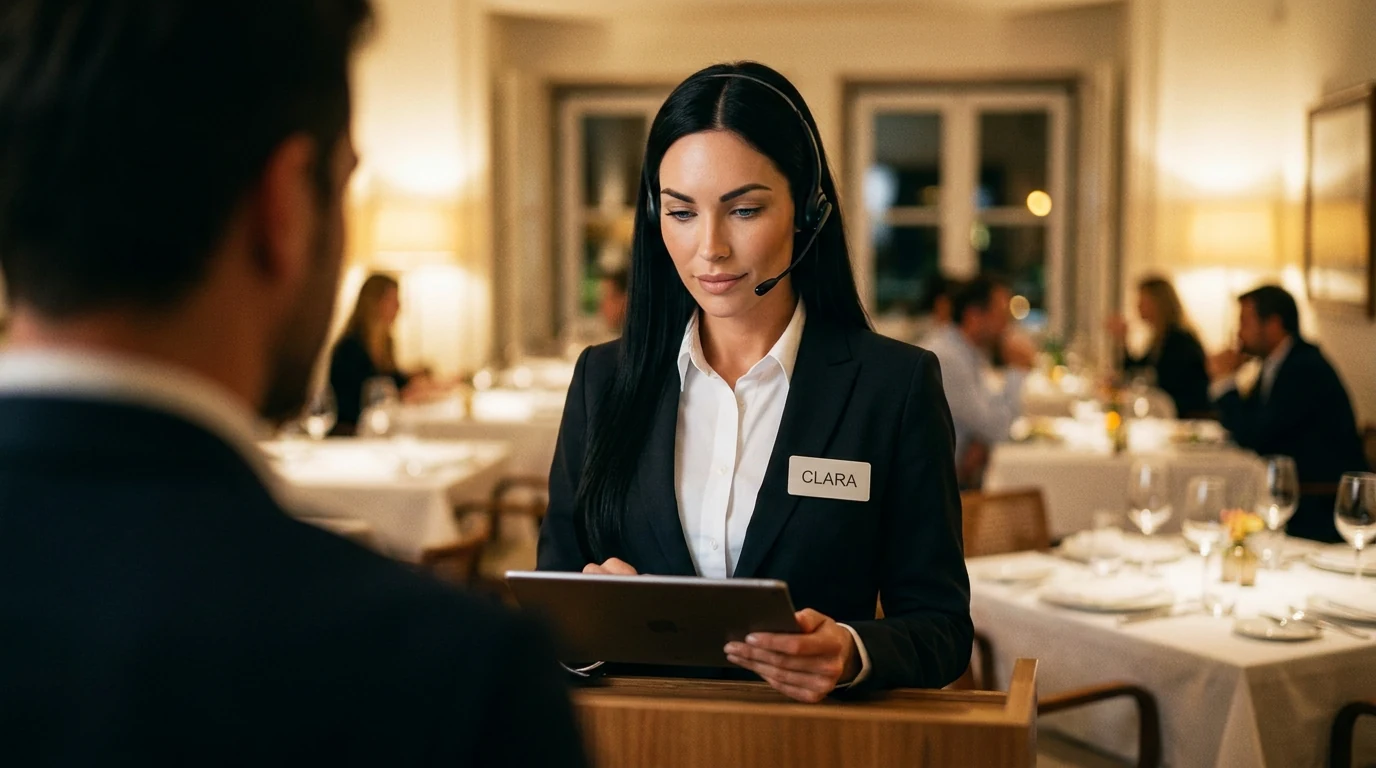
What Clara handles on a booking
Clara answers every call simultaneously, without pulling anyone off the floor:
- Takes and confirms reservations against real table availability - date, time and party size;
- Answers what is always asked - hours, address, parking, whether there is a terrace, whether dogs are welcome, whether there are vegetarian options;
- Captures allergies and dietary restrictions at the moment of booking, so the kitchen knows before service starts;
- Handles large parties and special requests by routing to management what needs a human decision;
- Confirms the day before and releases the table when a booking is cancelled, so it can be given to somebody else.
The sector case is developed in AI phone answering for restaurants.
The bookings that never show up
The reserved table that stays empty is hospitality's silent loss: you turned away someone who wanted in, and the table earned nothing. On a Friday or Saturday, two of those per service is a real hole in the night.
A phone confirmation the day before works better than a message because it can be settled there and then: whoever is no longer coming cancels on the call and the table goes back into availability in time to be filled. A table released a day early can still be sold; an empty chair at nine cannot.
It is also repetitive work at a fixed time of day that nobody does when the book is full - exactly the sort of task that should leave the team.
Tourists and the language barrier
In Lisbon, Porto and the Algarve a large share of calls are not in Portuguese. A foreign guest who is not answered in their own language gives up faster, and a server trying to decode an accent mid-service is a mis-taken booking waiting to happen.
Clara speaks native European Portuguese, English and Spanish, and handles more than 10 languages with the same ease. The booking is recorded correctly regardless of who calls - including the name, which is where the confusion usually starts.
What always stays with the team
The experience in a restaurant is made in the room, and none of this changes that. A complaint about the food, a special request from a regular, booking a private event: all of that is a conversation for management and should stay that way.
What leaves the team is the repetitive triage - hours, address, availability, confirmations - that eats attention during service and distinguishes your restaurant from nobody else's. The goal is not technology on the phone line. It is that the floor never stops for the phone, and no table goes unbooked because everyone was working.